Dr. John S. Hogg, DABR, DABVLM, RPVI, RPhS, RVT, RVS | Founder, MedicalVein Clinic®
The most common vein question I hear from women has nothing to do with varicose veins. It’s some version of this: “Dr. Hogg, I’ve started noticing more veins in my legs. Is this normal, or is something wrong?”
In response, I first ask our patients how their legs feel.A vein you can see and a vein that’s failing are two different things, and that’s the distinction that matters. Visible veins on healthy legs usually don’t hurt, swell, or ache. Diseased veins do. If your veins are more noticeable but your legs feel fine, you probably have little to worry about. But, if they’re changing, and your legs feel heavier, more swollen, or more tired by the end of the day, it’s time to get them checked.
Why veins get more visible (and why that’s often fine)
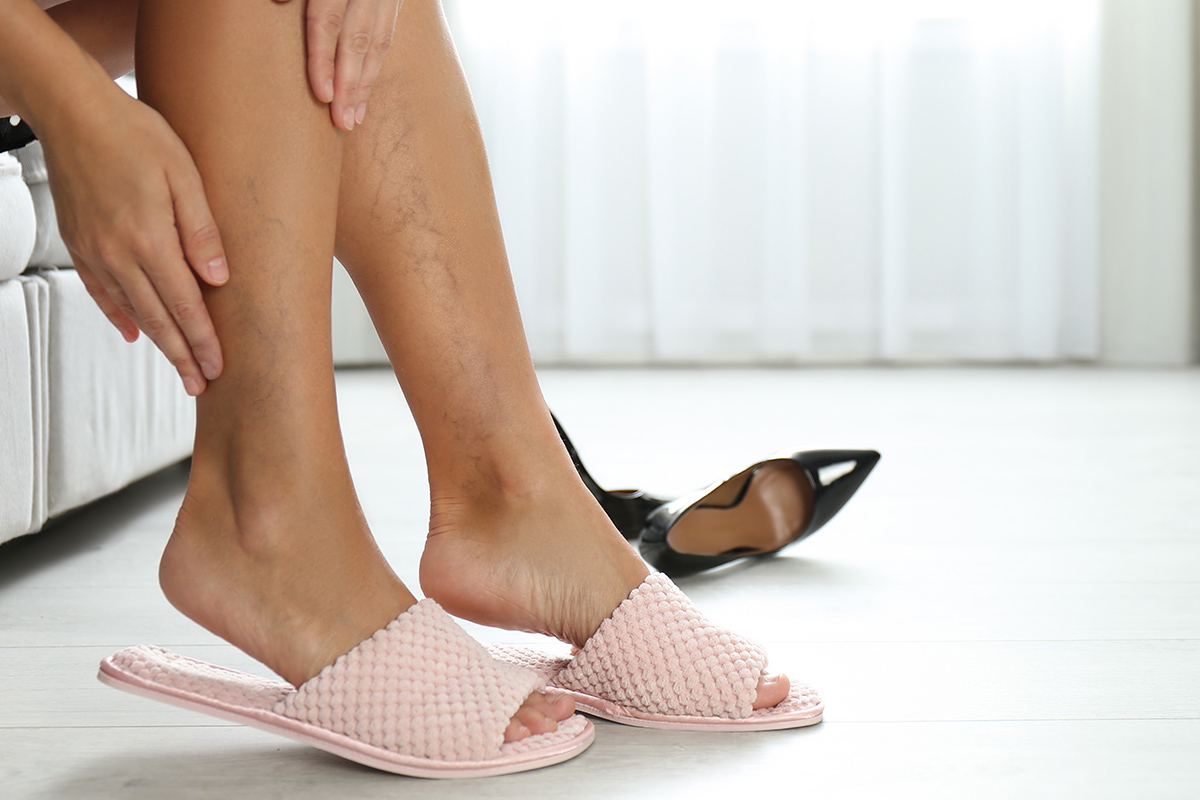
Most women notice more veins as the years go by, and in the majority of cases, nothing is wrong. You might notice them after losing weight, during a hot San Antonio summer, after a workout, or at the end of a long day on your feet. Skin also thins as we age, which makes veins easier to see. Heat expands veins. Dehydration makes the veins in your hands and feet stand out. None of that automatically means disease.
So when a patient tells me, “I only notice them when it’s hot,” or “my feet veins pop when I’m dehydrated,” I’m usually reassuring her. Seeing a vein is not, by itself, a reason to worry.
When your veins are telling you something
The conversation changes when a patient says something like: “My veins seem larger than they used to be, and by the end of the day, my ankles swell, and my legs feel heavy.” Now the visible vein isn’t the problem. It’s the symptom pointing to the problem.
The symptoms I take seriously are heaviness, ankle swelling, tired or aching legs after standing, throbbing, restless legs at night, and leg fatigue that’s out of proportion to your activity. The pattern I hear most: “My legs feel fine in the morning, but by the time I get home, they’re shot.” That end-of-day pattern often points to venous insufficiency, where the one-way valves inside your veins stop moving blood back toward your heart efficiently, and it pools in your legs instead.
This affects men, too, by the way. Chronic venous insufficiency is common in women, but it isn’t a women’s-only condition, and it isn’t only an older person’s problem. Research published in the Annals of Epidemiology (Beebe-Dimmer et al., 2005) found that chronic venous insufficiency affects up to 40% of women age 40 and over, however, much of it goes undiagnosed because the symptoms get written off as normal aging.
Spider veins, bulging veins, and what they signal
Spider veins are the small red, purple, or blue webs just under the skin. Most of the time, they’re cosmetic in nature. The patient who says “I have a few, but they don’t bother me” usually has nothing to treat. The patient who has more of them and whose legs ache every day is describing vein disease, which is progressive.Spider veins aren’t dangerous on their own, but a sudden increase of them, along with symptoms, can be an early sign that the deeper veins aren’t working.
Bulging, rope-like veins running down the calf get a closer look from me. That shape usually means the vein is under abnormal pressure. A lot of women wait until a varicose vein hurts before having them checked. I don’t recommend that. Pain is often a late symptom, and a vein can struggle for years before it becomes uncomfortable. A bulging vein doesn’t automatically mean trouble, but it’s worth investigating before it gets there.
A simple test you can try at home
Spend 20 minutes with your legs elevated above your heart. If your swelling, pressure, aching, and heaviness ease up, that indicates your symptoms may be tied to vein function. It’s not a diagnosis, but it’s useful information, and it’s worth mentioning at your appointment.
When to call a vein specialist
Pay attention to what you feel, not just what you see. I recommend an evaluation if you notice persistent leg swelling, heaviness, aching or throbbing, fatigue with standing, restless legs, bulging veins, brown skin discoloration around the ankles—we call this a Rust Tattoo™—or symptoms that keep getting worse. These are common. However, common isn’t the same as normal.
Is it a sign of a stroke?
No. Spider veins and varicose veins don’t warn of a stroke, and visible leg veins don’t cause one. That said, some sudden symptoms need attention right away. Get immediate care for sudden swelling in one leg, severe leg pain that comes on fast, redness and warmth along a vein, chest pain, or shortness of breath. Those can point to a blood clot.
The bottom line
Most visible veins reflect aging, genetics, pregnancy, weight changes, or ordinary physiology, and they’re harmless. The question isn’t whether you can see a vein. It’s whether your legs are trying to tell you something. When patients come to see me, I rarely start by looking at their veins. I start by listening.
If they’re changing and your legs feel heavier, more swollen, or more tired by the end of the day, get them checked. Call Medical Vein Clinic® at 210-622-8000 or email info@medicalveinclinic.com to schedule your evaluation at our Stone Oak or Northwest San Antonio locations.
Healthy Legs Take You Further™.
John Hogg, MD, DABR, DABVLM, RPVI, RPhS, RVT, RVS Founder & CEO, Medical Vein Clinic® Board-Certified in Diagnostic Radiology and Venous & Lymphatic Medicine Registered Physician in Vascular Interpretation, Registered Phlebology Sonographer, Registered Vascular Technologist, Registered Vascular Specialist