How Your Vein Health Impacts Sleep
By John Hogg, MD, DABR, DABVLM, RPVI, RPhS, RVT, RVS Founder, Medical Vein Clinic
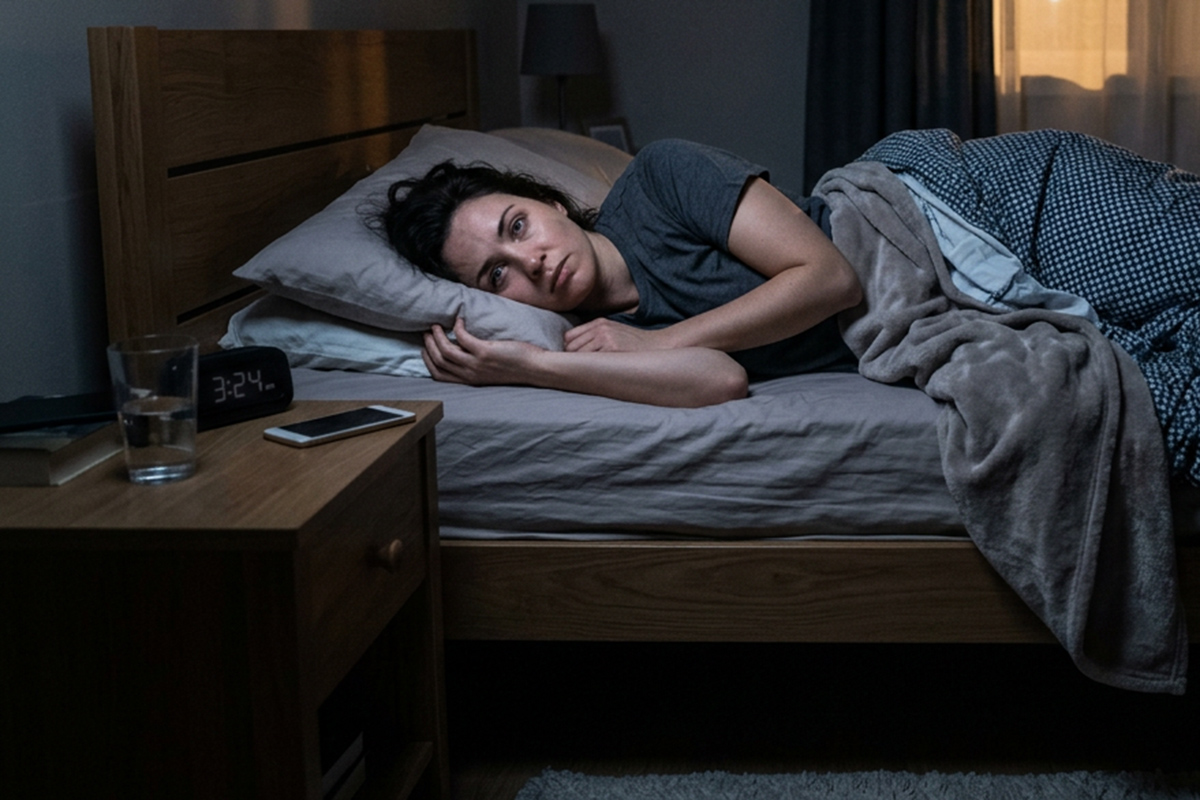
You know the routine. It’s 2 AM, and you’re awake again. You flip the pillow, adjust the covers, shift your legs, and try to get comfortable. A hot flash hits, and now you’re fully awake, staring at the ceiling while everyone else sleeps.
If that sounds familiar, you’re not alone. Somewhere between 40 and 60 percent of menopausal women deal with significant sleep disruption. It’s one of the most common complaints I hear, second only to hot flashes. In many cases, what’s keeping you up at night isn’t just hormonal. It’s vascular.
What Changes During Menopause
The female body produces more than 50 types of hormones. Of those, estrogen and progesterone play a role in how you sleep. Estrogen helps regulate body temperature and keeps your sleep cycles more stable. Progesterone has a calming effect that helps you fall and stay asleep.
When those hormones drop, your sleep changes. You don’t sleep as deeply. You wake up more often. And once you’re awake, it’s harder to fall back asleep.
Hot flashes are the obvious reason. Your body misfires on temperature control, blood rushes to the surface, and you wake up overheated. And it can happen several times a night.
But that’s not all that’s going on.
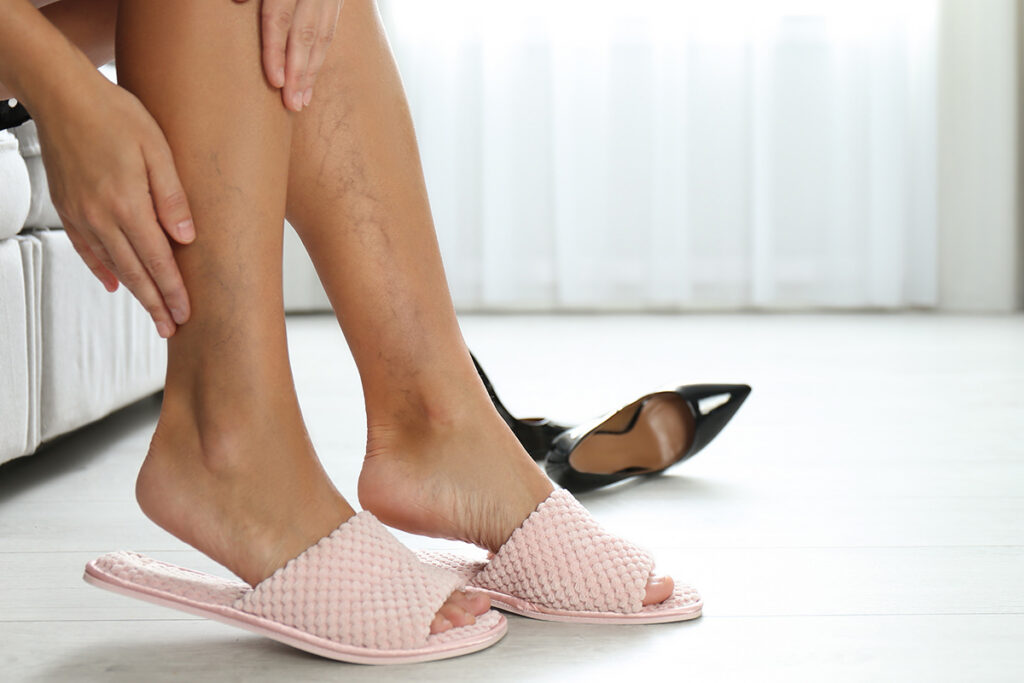
A lot of women start to notice something else. Their legs won’t settle. There’s a restless, uncomfortable feeling that makes it hard to stay still.
That’s not random. In many cases, that’s circulation.
Your veins are responsible for moving blood back to your heart against gravity. They rely on small one-way valves and the natural pumping action of your calf muscles to do it.
When those valves weaken, blood doesn’t move the way it should. It starts to pool in the lower legs. Pressure builds. The surrounding tissue becomes irritated.
You feel that as heaviness, aching, cramping, or that restless sensation that won’t let you settle down at night.
When you lie still, you lose the help of your calf muscles. Blood flow slows. Pressure increases. Symptoms become more noticeable.
When you get up and move, you feel better. Not because you distracted yourself, but because you helped your circulation do its job.
That instinct to move your legs at night is often your body trying to correct a circulation problem.
What the Research Is Showing
We’re seeing this more clearly now. New research has shown a strong association between restless legs symptoms and chronic venous insufficiency.When the underlying vein problem was treated, symptoms and sleep improved. And in many cases, the improvement was significant.
One study showed a more than 60 percent reduction in symptom severity after treating venous reflux. Another found that nearly all patients with both conditions saw meaningful improvement once the vein issue was addressed.
What Can Help in the Moment
If you’re lying there at 2 AM and your legs won’t settle, a few simple things can help:
Elevate your legs Lying flat with blood pooling in your lower legs increases pressure and discomfort. Elevate your legs on a couple of pillows or the arm of a sofa for 15 to 20 minutes. This helps move that blood back toward your heart and takes pressure off the tissue that’s driving the restlessness. For many women, that’s enough to quiet things down.
Take a short walk Not a workout. Just a few minutes around the house. Your calf muscles act as a second pump for your veins, and even a short walk helps move blood out of the lower legs. That urge to get up and move is your body trying to fix the problem. Listen to it, then go back to bed and elevate your legs.
Cool your lower legs If a hot flash is part of the picture, run cool water over your calves and ankles for a minute or two. It helps bring your temperature down and can ease some of the pressure in your lower legs at the same time.
These are ways to get through the night and improve your sleep. The longer-term solution is to prevent the problem in the first place.
What To Do Next
If you’re dealing with leg heaviness, restlessness, cramping, or visible vein changes, those are not cosmetic issues. They are signals.
A venous ultrasound is simple, non-invasive, and takes about 30 minutes. It shows us how your veins are functioning, and whether those valves are doing their job.
If they aren’t, there are effective treatments, covered by insurance, that we perform in the office without surgery. When we address the underlying circulation problem, many patients see a noticeable improvement in sleep, often without medication.
You should not have to fight your way through the night.Sometimes the problem isn’t your sleep. It’s your circulation.
Dr. John Hogg, MD, DABR, DABVLM, RPVI, RPhS, RVT, RVS, is a board-certified radiologist specializing in Vascular & Interventional Radiology and the CEO/Founder of Medical Vein Clinic. With more than 30 years of experience, Dr. Hogg has established San Antonio’s leading vascular treatment clinic, helping thousands of patients since opening in 2017. To learn more, visit https://www.medicalveinclinic.com.