
Mays Cancer Center Expands Access to Research and Comprehensive Breast Cancer Care
By Paul J. Watkins
Breast cancer is one of the most important issues facing women in South Texas and throughout the country. While advances in diagnosing and treating breast cancer continue to develop, not all women can access them. Mays Cancer Center at UT Health San Antonio is removing barriers by making new breast capabilities available to women in San Antonio and the surrounding communities.
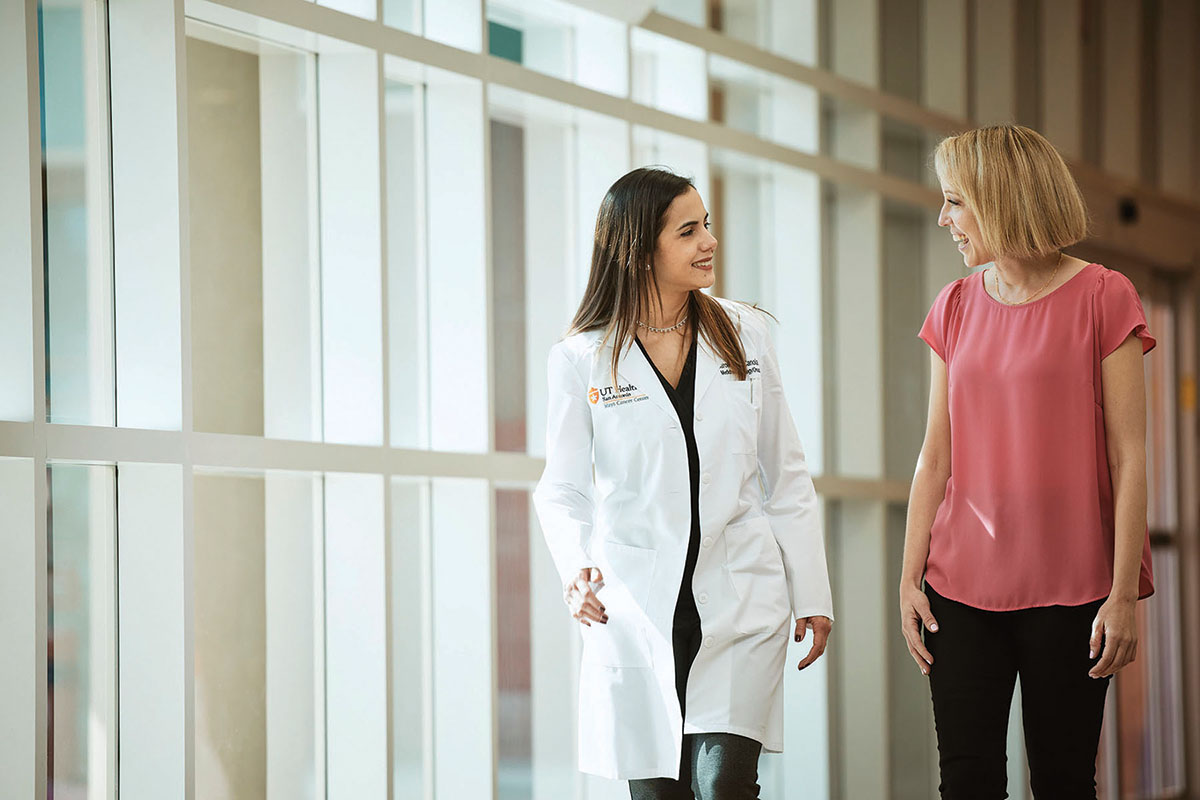
“In 2024, UT Health San Antonio opened the UT Health San Antonio Multispecialty and Research Hospital,” said Marcela Mazo Canola, MD, Associate Professor of medicine in the Division of Hematology and Oncology at UT San Antonio’s Joe R. and Teresa Lozano Long School of Medicine and a breast medical oncologist and researcher at Mays Cancer Center. “The hospital is expanding the services available to patients with breast cancer, including breast cancer surgery and, soon, breast MRI. Together with our new breast imaging services available at Mays Cancer Center, medical oncology, radiation oncology and other specialized services, these expanded capabilities allow us to offer the full spectrum of breast cancer care within one system, from screening and diagnosis through treatment and survivorship.”
The oncologist adds that it’s important to bridge care and access gaps because every patient should have access to timely, high-quality care regardless of where they live or their socioeconomic or cultural background.
“Having access within one health system to specialized imaging, breast surgery, plastic and reconstructive surgery, medical oncology, radiation oncology, pathology and clinical trials, along with the multidisciplinary expertise and resources of a National Cancer Institute (NCI)-designated Cancer Center, allows us to coordinate care across specialties. That can help us diagnose cancer earlier, determine the right treatment, and address barriers that can lead to poorer outcomes. Ultimately, it’s about making sure each breast cancer patient receives comprehensive, equitable care.”
Mays Cancer Center serves a 38-county South Texas region, 25 of which are rural. As part of its NCI designation, the center’s Community Outreach and Engagement program identifies cancer disparities and barriers to care across the region and works with community and clinical partners to improve awareness and access to screening, cancer care, and clinical trials. Another program, GRACIAS Texas, reaches rural and border communities through hereditary cancer risk assessment for various types of cancer, including breast cancer.
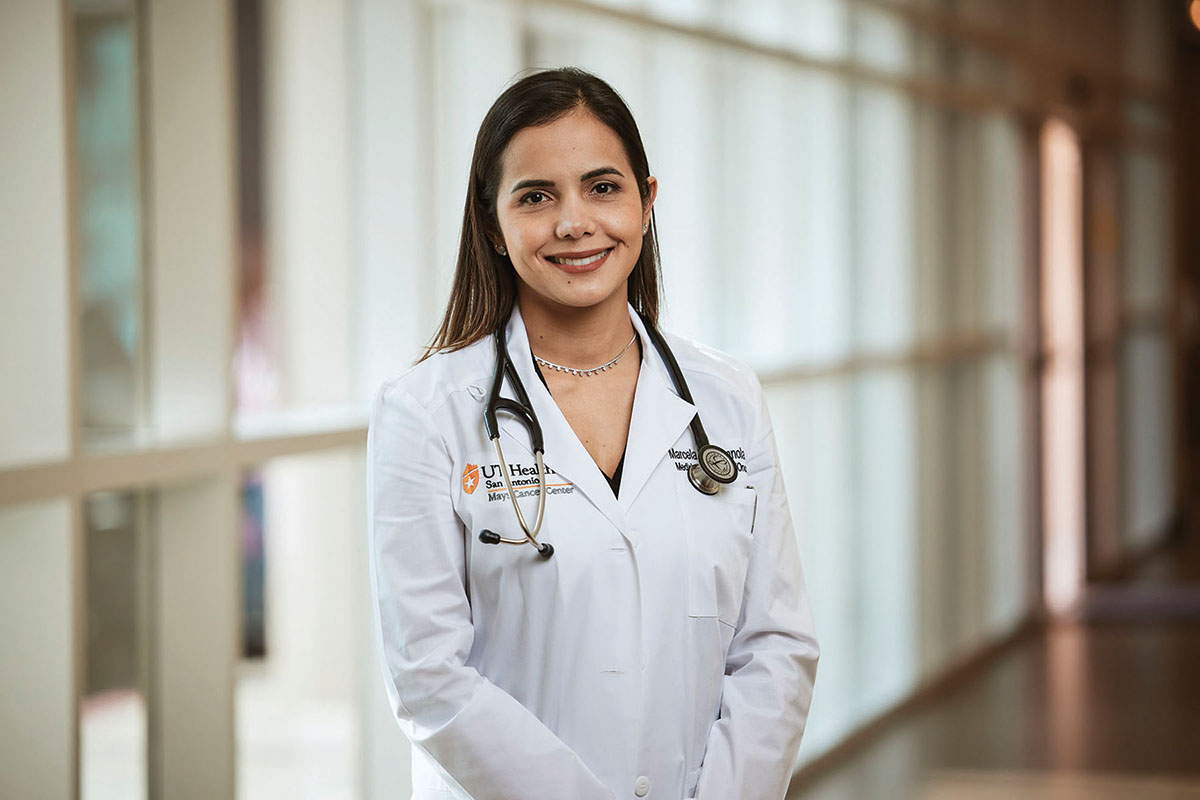
Dr. Mazo Canola adds that about 60% of San Antonio’s population is Hispanic. “Women who don’t speak English are often less likely to seek health care services. At UT Health San Antonio and Mays Cancer Center, many of our care team members are bilingual and can help patients who don’t speak English or who feel more comfortable communicating in another language.”
Dr. Mazo Canola notes potential differences in breast cancer biology and treatment response among Hispanic and Latin American populations. “We have some emerging evidence suggesting that Latin or Hispanic women have a more aggressive biology or have some genetic changes within the breast cancer tumor that could make that tumor more aggressive and perhaps less responsive to the traditional treatment we propose.”
She also points to disparities in clinical trial participation among Hispanic patients. “If we look at the big clinical trials that have been done around the world to investigate treatment differences or responses to treatment for various types of cancer, the vast majority of participants are Caucasians. Although Hispanics are a minority in the US, they make up a large share of the population in South Texas. Despite this, we still don’t see enough Hispanics participating in clinical trials. Our cancer center has done a lot to educate the Hispanic community about the importance of participating. Expanding our research capabilities makes it easier for Hispanic patients to take part in those trials.”
At Mays Cancer Center, more than 60% of patients participating in clinical trials are Hispanic, compared with about 10% nationally in National Cancer Institute clinical trials.
San Antonio is home to the San Antonio Breast Cancer Symposium, the world’s largest breast cancer research meeting, hosted annually by Mays Cancer Center and the American Association for Cancer Research (AACR). The symposium gives physicians and researchers in South Texas direct access to emerging findings that can help inform patient care locally and around the world.
Breast cancer screening and treatment decisions are affected by multiple factors, including genetics and breast density. Dr. Mazo Canola says an estimated 5% to 10% of breast cancers are associated with inherited genetic changes that can increase a person’s risk of developing breast cancer or other cancers. Women at higher risk may qualify for enhanced screening that includes breast MRI in addition to mammography.
She also mentioned breast density: “If a radiologist says breasts look dense, it means they may have difficulty seeing very small lesions within the breast. Depending on a woman’s overall breast cancer risk, she may be eligible for additional screening, which can include MRI.”
For women who aren’t candidates for breast MRI, Mays Cancer Center will offer contrast-enhanced mammography. Mays Cancer Center is the only center in South Texas that will be offering this new imaging option.
“Contrast-enhanced mammography combines regular digital mammography with the use of a contrast injection,” explains Dr. Mazo Canola. “Once the dye has been injected, the radiologist looks at the patient’s images and is more likely to see areas that may have increased blood flow. As a result, the radiologist might be able to identify some tumors that are hidden within the breast.”
“As we’re treating patients with breast cancer at Mays Cancer Center and in the UT Health San Antonio Multispecialty and Research Hospital,” said Dr. Mazo Canola, “we’ll have greater opportunities to bring new research and treatment approaches to our patients and incorporate advances in breast cancer care as evidence evolves. Treating breast cancer at the hospital will also expand access to care for patients and strengthen our ability to conduct research and clinical trials here in San Antonio.”
To request an appointment with Mays Cancer Center at UT Health San Antonio, call 210-450-1000. Learn more about its breast cancer program.