
What Are Peptides and Are They Safe to Use?
By Bill Murphy, MD, Medical Director, Turquoise Springs Medical Spa
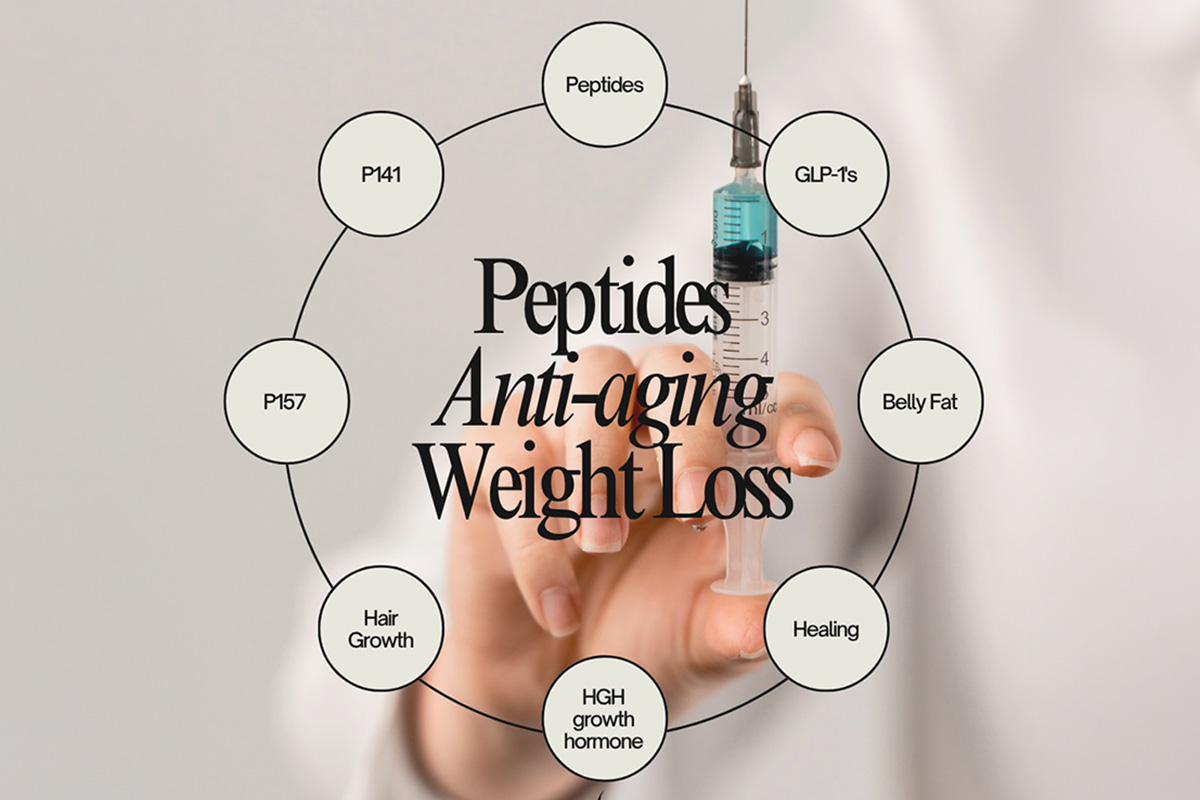
Peptides are everywhere right now-but are they safe to use? They are the latest buzz subject on social media, and the most popular “advice hack” at the gym. My patients are asking about peptides in general, and specific peptides for targeted health needs. I hear, “Should I be on a peptide for healing, hair growth, belly fat, or for improved sexual health? What about P157, P141, HGH growth hormone, or GLP-1’s?” Yesterday, I was asked by a patient if the Wolverine supplement he is buying at his gym would cause a problem with other medications he takes.
WHAT ARE PEPTIDES AND HOW DO THEY WORK?
Peptides have become popular in medicine, fitness, skincare, anti-aging, and for weight loss and weight management. They are natural in our bodies and critical for our health. Manufactured copies have been commercially available for decades. Insulin is a peptide and was first used to treat diabetes over one hundred years ago, in 1922. Peptides are not a single drug or treatment, but are a family of small chain amino acids. Amino acids are the natural building blocks of proteins. Short chains of amino acids of different lengths are called peptides. The varied length of the chain and the specific amino acids in the chain define which peptide is made by the body. After we eat healthy protein, our body naturally produces thousands of peptides which act as hormones, signaling molecules, nerve transmitters, anti-microbial substances, and help run a myriad of body systems. Some peptides work on the growth-hormone pathways and have become popular in the anti-aging and bodybuilding communities. However, even if a peptide occurs naturally in our body and regulates a normal process, using it or a copy of it may not be safe or guarantee improved health.
NATURAL DOESN’T ALWAYS MEAN SAFE?
There is not one answer to the safety question. Safety depends on the specific peptide, dose, method of administration, quality of the product and source, duration of use, and the medical condition being addressed. A peptide approved as a prescription medicine has had rigorous investigation and extensive clinical safety testing. An experimental peptide purchased online or at a local gym may have little or no reliable human safety data. Some risks may not be apparent until used by large numbers of people for many years. This is particularly true of experimental peptides which promote longevity, purport to “reverse aging”, and market other claims which extend far beyond what has been proven with scientific research. Potential side effects can vary depending on the particular peptide. The side effects might include nausea, vomiting, headache, blood sugar and blood pressure issues, injection site reactions, allergic reactions, and other complications.
LETS COMPARE P-157 (EXPERIMENTAL) TO GLP-1 (RIGOROUS RESEARCH)
The GLP-1’s are synthetic peptides which have been tested extensively and initially for a single indication. Research sought to prove if they work to help with diabetes. The various peptides in this GLP-1 category are semaglutide, tirzepitide, and the newer retatrutide. They were proven to stabilize blood sugar and help control diabetes after rigorous scientific study and became prescription medications. Since then, with use by thousands of people, they were also found to help with other issues like obesity, heart disease, kidney disease, fatty liver, sleep apnea, and neurodegenerative diseases. Of course, they have side effects and must be monitored, but they have been found to be safe and efficacious over time for the original indication and for other indications.
P-157 is a popular synthetic peptide first used decades ago for muscle wasting and atrophy due to cancer and chronic disease. It is one of two peptides in the Wolverine product mentioned by my patient earlier. The product Wolverine is named after the Marvel comic character and marketed for “rapid healing” of injuries. It has not undergone formal human testing, and the data gathered has been primarily from lab and animal testing. Because of old reports of use for muscle wasting, word-of-mouth gym reports, and aggressive marketing, its use has been expanded. Now one can read on social media how P-157 can also repair muscle and tendon tears, heal gut disease, reduce inflammation and pain, and help with training performance recovery. These claims are not proven and are anecdotal, and it is considered an experimental peptide. Despite this, it is injected daily by thousands of people as a supplement to aid with their health and healing plan.
LET’S WRAP IT UP
Peptide therapy is an important and rapidly developing area of medicine. However, peptide use does not mean it is risk-free, natural, safe, or even that it will work for the reason it is being used. Experimental peptides obtained from questionable or unregulated sources can carry significant uncertainty. Ultimately, the right question is not simply, “Are peptides safe?” It is “Is this specific peptide, for this specific purpose, at this dose supported by enough credible evidence to justify its potential risk?” At Turquoise Springs, we use peptides for a variety of reasons, including skin health, weight loss, disease prevention, sexual health, and tissue healing. We only recommend products to our clients after careful consideration of all of these questions.
Before starting any peptide, please talk with a qualified medical provider about whether it is appropriate for you.
Turquoise Springs Medical Spa
210-253-3313