By John Hogg, MD, DABR, DABVLM, RPVI, RPhS, RVT, RVS Founder, Medical Vein Clinic
Going through cancer treatment increases your risk of blood clots. Here’s how to minimize those risks.
After a breast cancer diagnosis, the calendar fills fast: surgery dates, treatment plans, and follow-up scans. Somewhere in that rush, the health of veins in the legs rarely comes up, but it should. Women with breast cancer carry a three- to four-time higher risk of developing a dangerous blood clot than women the same age without cancer. And that risk is highest in the months right after diagnosis.
I treat vein and vascular disease, not cancer. But blood clots don’t respect specialty lines, and a clot that starts in a leg vein can travel to the lungs, resulting in life-threatening pulmonary embolisms. So I want to explain what the connection actually is, when the risk peaks, and what a woman going through treatment can watch for.
I’ll say the reassuring part up front: a clot is one of the few complications of cancer treatment a woman can help catch on her own, and, detected early, is very treatable. Knowing the warning signs isn’t one more thing to fear. It’s a measure of control in a stretch of life when almost nothing feels within your control.
Different types of clots and risks
The medical name is venous thromboembolism, or VTE. It covers two related events: a deep vein thrombosis (DVT), a clot in a deep vein, usually in the leg. Then there are pulmonary embolisms (PE), when part of a clot breaks loose and lodges in the lungs. A PE is the reason a leg clot is never just a leg problem.
Patients with cancer have roughly four to seven times the clot risk of the general population. Breast cancer sits on the lower end of that range compared with pancreatic or lung cancer. But it’s the most commonly diagnosed cancer in women, so the number of women affected is large even when the per-person risk is moderate. In early breast cancer, clots occur in about 5 to 10 percent of patients receiving chemotherapy, and that figure rises in advanced disease.
Why cancer and clotting are linked
For a long time, doctors assumed clots in cancer patients came from lying still during recovery, or from a tumor physically pressing on a vein. Those things matter, but they’re not the main driver. The tumor itself changes the chemistry of the blood.
Breast cancer cells and the tissue around them release factors that tip the blood toward clotting, stirring up inflammation, and irritating the lining of the blood vessels. Researchers call this thromboinflammation, and it explains why the clotting risk shows up before surgery, before long hospital stays, sometimes before treatment even begins. It’s woven into how the disease behaves.
Timing matters more than people expect
The risk isn’t spread evenly across the years of treatment and recovery. It’s front-loaded. The first three to six months after diagnosis carry the sharpest risk, when surgery, catheter placement, and the start of chemotherapy stack on top of the biology already at work.
Your treatment plan matters here too. Some breast cancer medications carry more clot risk than others, and the risk can be higher in the first few months on a new one. This is a good thing to ask your oncologist about directly, since they weigh it against everything else your care needs. None of it is a reason to hesitate on treatment. It’s a reason to know your own plan and speak up if something feels off.
What to watch for
A DVT usually shows up in one leg, not both. You might notice swelling on that side, or an ache in the calf that feels like a cramp but won’t let go, sometimes with warmth or a reddish, darkened patch of skin over it. When a clot reaches the lungs, the signs change and grow urgent: shortness of breath that comes on suddenly, chest pain that sharpens when you breathe in, a racing heart, or a cough you can’t explain.
Leg symptoms warrant an urgent call to your medical care team. Breathing or chest symptoms are an emergency, so call 911. The clots that turn dangerous are almost always the ones that went unmentioned.
What’s in your hands
More than most patients expect. Movement is protective and costs nothing. As soon as your surgical team clears it, getting up and walking keeps blood moving through the leg veins. On a long flight or drive during treatment, standing up and flexing your ankles every hour or so keeps the blood moving, too. Hydration helps–drink lots of water. Do what you can to keep other risk factors—like weight, blood pressure, and smoking–in control, as they each raise clot risk, on top of everything treatment is already asking of your body.
Some women at higher risk are put on preventive blood thinners during chemotherapy, which is a call your oncologist makes for your situation. But the most useful thing you carry needs no prescription, and that’s your own attention. The woman who recognizes what a clot feels like and picks up the phone when her calf swells is the one who changes her own outcome.
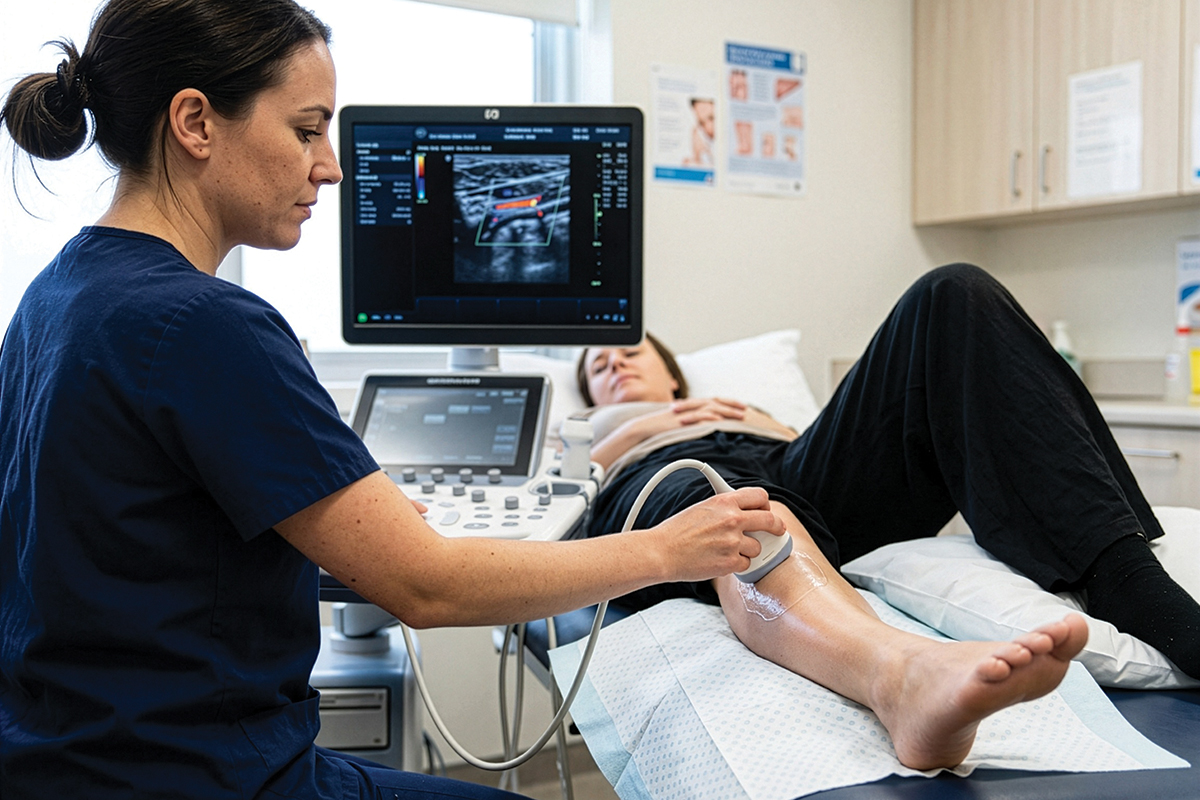
At Medical Vein Clinic, we work alongside oncology teams when blood clot concerns come up during or after breast cancer treatment. If you or someone you’re caring for notices leg swelling or pain during this time, don’t wait it out. A quick ultrasound can tell us a great deal, and catching a clot early changes everything that comes after.
This article is for general education and is not a substitute for individual medical advice. Talk with your oncologist and care team about your specific risk. If you have symptoms of a clot in the lungs, such as sudden shortness of breath or chest pain, call 911.