Living Life Fully
By Michelle Vasquez | Photography by Suzanne Pack
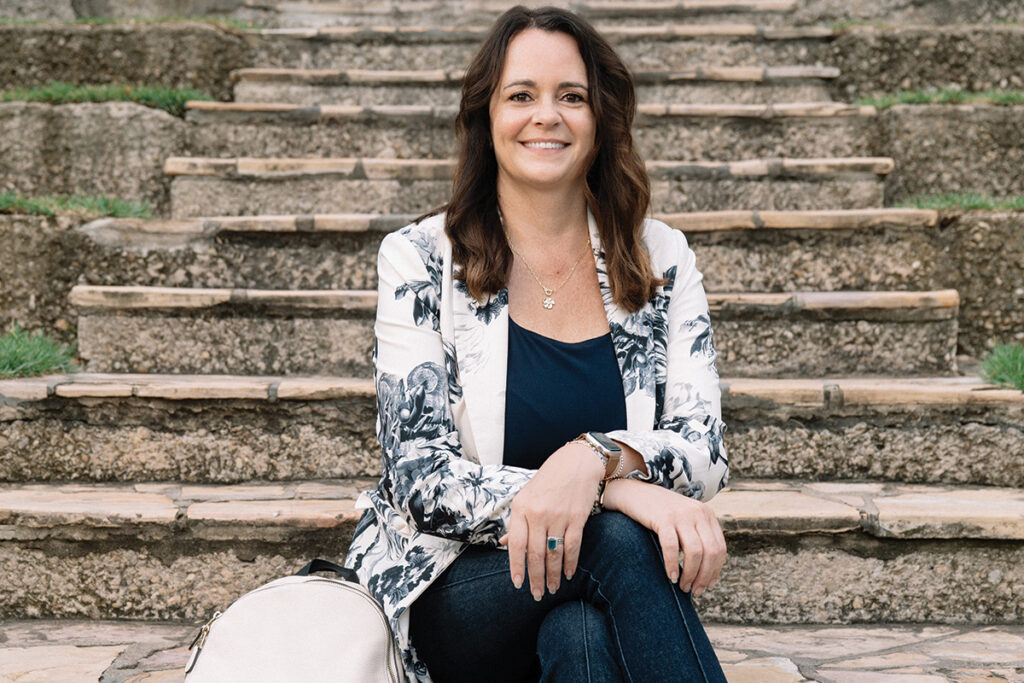
Katelyn Grun approaches life with intention. Her goal is not to work around limitations, but to participate fully in every experience available to her. That mindset shapes both her personal life and her work as Director of Philanthropy at Guide Dogs of Texas.
Grun was born and raised in San Antonio, a community she remains deeply connected to, as a Lions Club member, a longtime resident, and now a leader at one of the city’s most distinctive nonprofits. Her perspective was shaped early. At the age of seven, she lost a significant portion of her vision and has lived with vision loss for more than two decades.
In school, she often encountered systems not designed to support her. When accommodations were unclear, the default response was exclusion. “The answer was always, just don’t worry about it, just sit this assignment out,” she recalls. Rather than accept that, she pushed back. “I’m not going to learn how to read? I’m not going to learn how to type?” That early refusal to be sidelined became a defining pattern.
Grun describes herself as “strong-willed,” and her career reflects it. She began in higher education administration before moving into alumni relations, where she discovered a passion for connecting people to purpose. When she was ready for her next step, she was clear about what she wanted. “I wanted to do something mission-focused that I could identify with,” she explains.
That search led her to Guide Dogs of Texas. Founded in San Antonio in 1989, it is the only accredited guide dog school in Texas and one of just 13 in the entire United States. The organization serves Texans who are blind or have low vision, providing not just the initial training and matching process but ongoing support for the full life of a guide dog team. The need is significant as nearly 800,000 Texans identify as blind or low vision, yet only about 10 percent use a mobility tool. For Grun, the mission was immediately personal. “There’s a mission I can identify with because I am the client,” she says.
Grun leads the philanthropy efforts driving that growth, and she does so with conviction rooted in lived experience. “When I talk to a donor, I’m honestly saying I believe in what we’re doing and how it changes your life,” she says.
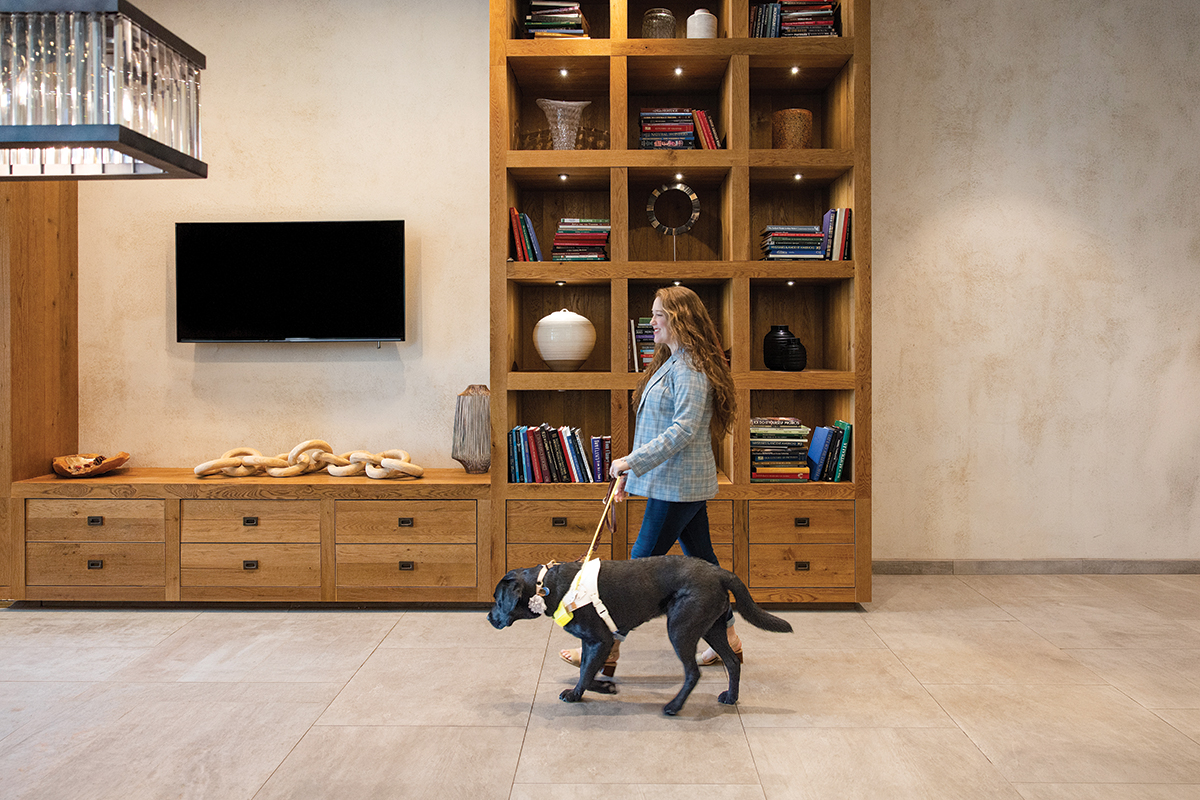
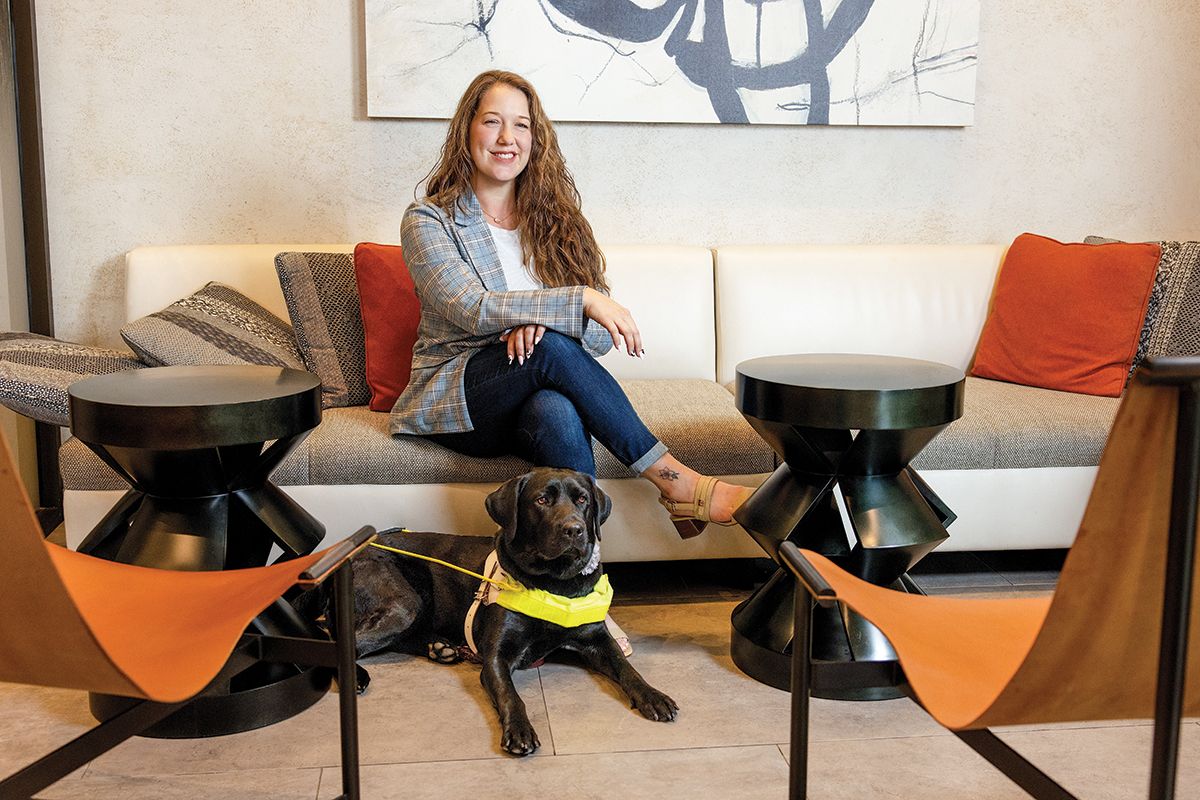
Her recent match with her guide dog, Trudy, has deepened that connection in visible ways. Donors and volunteers now see firsthand what the work makes possible. “They get to see a client working with a guide dog every time they have coffee or lunch with me,” she says.
Grun’s relationship with visibility has evolved over time. In her younger years, she avoided adaptive technology in public, not wanting others to notice her disability. That has changed. “I need to live my best life, and I want to participate to my full ability,” she says. At a recent George Strait concert, she used a monocular device to see the stage clearly, unbothered by the curious looks it drew. “I would have missed out on that if I let what other people thought of me sway the way I acted.”
For those navigating similar challenges, her message is straightforward. Speak up, she says, because “the person who knows you the best is you.” She is also honest that the path isn’t always smooth. “It’s not necessarily going to be an easy process. Everyone has their own challenges.”
Grun doesn’t frame her story as exceptional. She focuses on the daily decision to show up fully and hopes that’s enough to encourage others to do the same. “If I can give anyone hope or motivate anyone to feel like they can always do their best and experience life fully, I want to embrace that.”