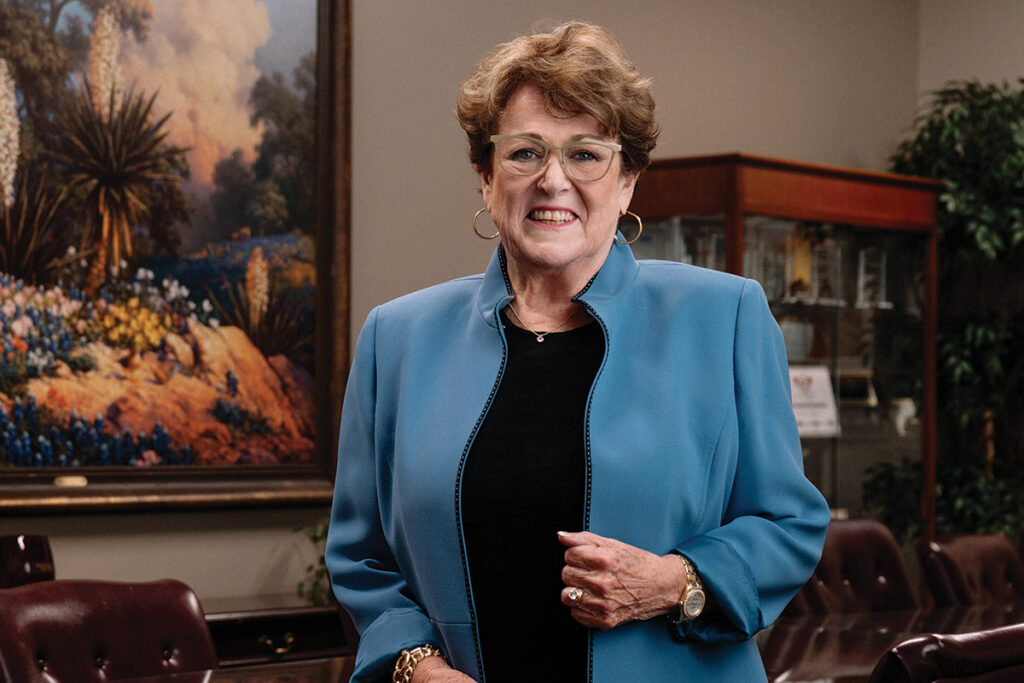
Mary Garr
Colonel (Retired), U.S. Army
President/CEO, Family Service Association
Photography by David Teran
How has your military career prepared you for your current job?
I had the privilege of being an Army Medical Service Officer and healthcare administrator, serving in military hospitals and clinics in the United States and overseas, helping to address the healthcare needs of our military servicemembers and their families’ health while also ensuring military medical readiness. In my penultimate assignment, I had the historic privilege of being the last Army Garrison Commander of Fort Sam Houston/ Camp Bullis and then the first Mission Support Group Commander of JBSA-FSH. In that role, I was able to support health from a community perspective and realized that our health is most influenced by where we live, work, play, etc., and that I could have a bigger influence on improving long-term health outcomes by working in the community. When I retired from serving our Nation, I wanted to still serve, and found that opportunity by serving my hometown here in San Antonio. Becoming the CEO at Family Service allowed me to use my education and experience to improve long-term health outcomes and life success for individuals and families by leading teams that help them overcome social determinants of health barriers through a trauma-informed care lens.
What advice do you have for other women who are transitioning out of the military into the civilian workforce?
Think about what you do not want to do as much as you consider what you might want to do. That will help you focus and not make early mistakes in your transition. Also, network and volunteer in your professional and civilian communities while still on active duty. Too many servicemembers start thinking about transitioning at the end of their careers, when they should be planning earlier. We recommend Soldiers create a career map to help plan their military service, but they should also include their post-military career thoughts and update it as life circumstances or opportunities change. It’s never too early to think about what assignments, education, and experience you need to be ready for your post-military career and incorporate them into your career, as best as possible.
Who or what has helped you the most in your career?
I had several mentors along the way who provided guidance and encouragement at different stages in my life, and I am grateful for that. I try to pay it forward by mentoring others now. Being curious and willing to adapt across sectors and finding the connections among them has also helped. Most military skills can be adapted to other career fields.
Any additional thoughts or questions you’d like to add?
Military service members should look not just at the for-profit sector, but also the nonprofit sector, which aligns well with the values instilled in our military service. Nonprofits are a viable post-military career field where you can use your skills, leadership, teamwork, and work ethic, and see your positive impact. In a nonprofit, you can continue to serve, just in a different way.
This Feature Sponsored by: