Finding Her Voice By Being First
By Michelle Vasquez | Photography by SAlexis Maxine Photography
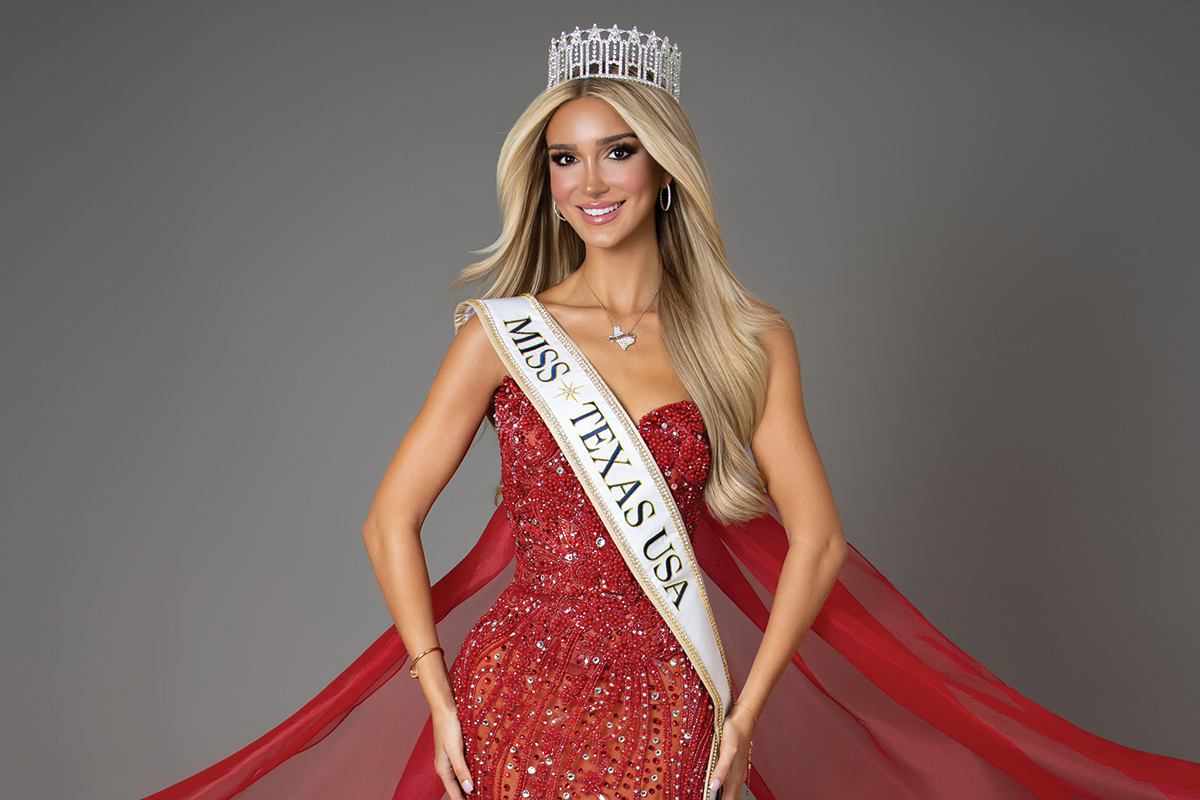
At 20 years old, Alexis Maxine Fuetsch has already accumulated a remarkable list of firsts. She became the youngest person ever to photograph for an NBA team when she began shooting for the San Antonio Spurs. She captured the first matchup between Victor Wembanyama and LeBron James. Now, as Miss Texas USA, the San Antonio native is the youngest contestant competing for Miss USA this year.
But for Fuetsch, being first isn’t really about the distinction. It is about what happens once someone is willing to step forward, claim a place in the room, and use the opportunity to speak. “I don’t think I recognized any of that until I became Miss Texas,” she says. “For me, being young and doing it ‘afraid’ was always part of my story.”
Fuetsch traces some of that fearlessness to her mother, who came to the United States alone from Romania at 18. Taking chances and moving forward without waiting for the perfect moment became part of how Fuetsch approached her own life.
Her advocacy began early. At eight, she raised $30,000 through an art show at Neiman Marcus San Antonio and donated the proceeds to the Children’s Rehabilitation Institute TeletonUSA (CRIT), beginning a relationship that has lasted more than a decade. Today, she serves as an international ambassador and next-generation gala chair, helping raise a record $350,000. That experience also helped Fuetsch understand the difference between supporting a cause and having the voice to advocate for it.
At 18, Fuetsch entered and won Miss San Antonio Teen, later placing in the top five at Miss Texas Teen USA. After stepping away to attend college, she realized she missed the philanthropic work that had been such a large part of her life. More importantly, she wanted a larger audience for it. Pageantry, she realized, could provide one, and today, she is Miss Texas USA.
“For me, it’s about having the microphone,” Fuetsch says. She is realistic about what a title can and cannot accomplish. A crown alone will not change legislation. But it can draw attention, start conversations, and introduce people to issues they may never have considered. Fuetsch points to the 2.5 million views on her Instagram as 2.5 million opportunities to introduce someone to CRIT, disability inclusion, or other issues that matter to her.
Her creative career has given her another kind of voice. Fuetsch discovered photography in high school, eventually photographing the All-American Bowl and becoming the youngest person to shoot for an NBA team. She later opened Alexis Maxine Photography in San Antonio, expanding into portrait, product, and commercial work. Her business now helps pay her college tuition, and one of her photographs is slated to appear on a Times Square billboard in September.
Her next arena for advocacy will be the law. A public relations student on the pre-law track at The University of Texas at Austin, Fuetsch is completing college in three years with a 4.0 GPA and ranks in the top two percent of her class. She plans to pursue disability rights law, recognizing that awareness and fundraising can only go so far without addressing the laws and systems affecting people with disabilities.
In many ways, each of Fuetsch’s achievements has expanded the size of the room in which she can speak. Fuetsch has been told she is too young, that she doesn’t belong, or that she should wait her turn. Her response has been to keep showing up, whether that means running a business, sitting down with a congressman, competing for Miss USA, or preparing for law school.
For Fuetsch, being among the first ultimately means making it easier for someone else to believe they can be next. “Being a leader is not about following the traditional path,” she says. “I really believe it’s about creating your own.”
Spotlight: Children’s Rehabilitation Institute TeletonUSA (CRIT)
For children with disabilities, rehabilitation can involve far more than physical therapy. At the Children’s Rehabilitation Institute TeletonUSA (CRIT), care extends beyond the child to the family and the world they must navigate together.
CRIT serves children with musculoskeletal and neurological disabilities through a multidisciplinary model designed to address their physical, psychological, and social needs. But what distinguishes the organization is its broader approach to rehabilitation.
Families receive support as they learn to navigate the realities that can accompany raising a child with a disability, from emotional and social challenges to accessing resources and understanding accommodations within the school system. The goal is not simply to provide therapy, but to help children and their families participate more fully in everyday life.
That sense of inclusion extends beyond clinical care. CRIT creates opportunities for children and families to celebrate milestones and traditions that might otherwise be financially or physically difficult to access, including quinceañeras and First Communions.
The San Antonio center is part of a larger international Teleton network with deep roots in Mexico. According to Miss Texas USA Alexis Marie Fuetsch, who has worked with the organization since childhood, the network includes 27 centers in Mexico and one in the United States.
For Fuetsch, CRIT’s impact comes down to something less easily measured: creating a place where children are known as individuals rather than defined by their disabilities.
It is an idea at the heart of CRIT’s work: rehabilitation can help a child move through the world, but true inclusion requires creating a world in which that child has the opportunity to fully belong.