
Deborah Omowale Jarmon
CEO/Director, San Antonio African American
Community Archive and Museum (SAAACAM)
By Blithe Wiley | Photography by David Teran
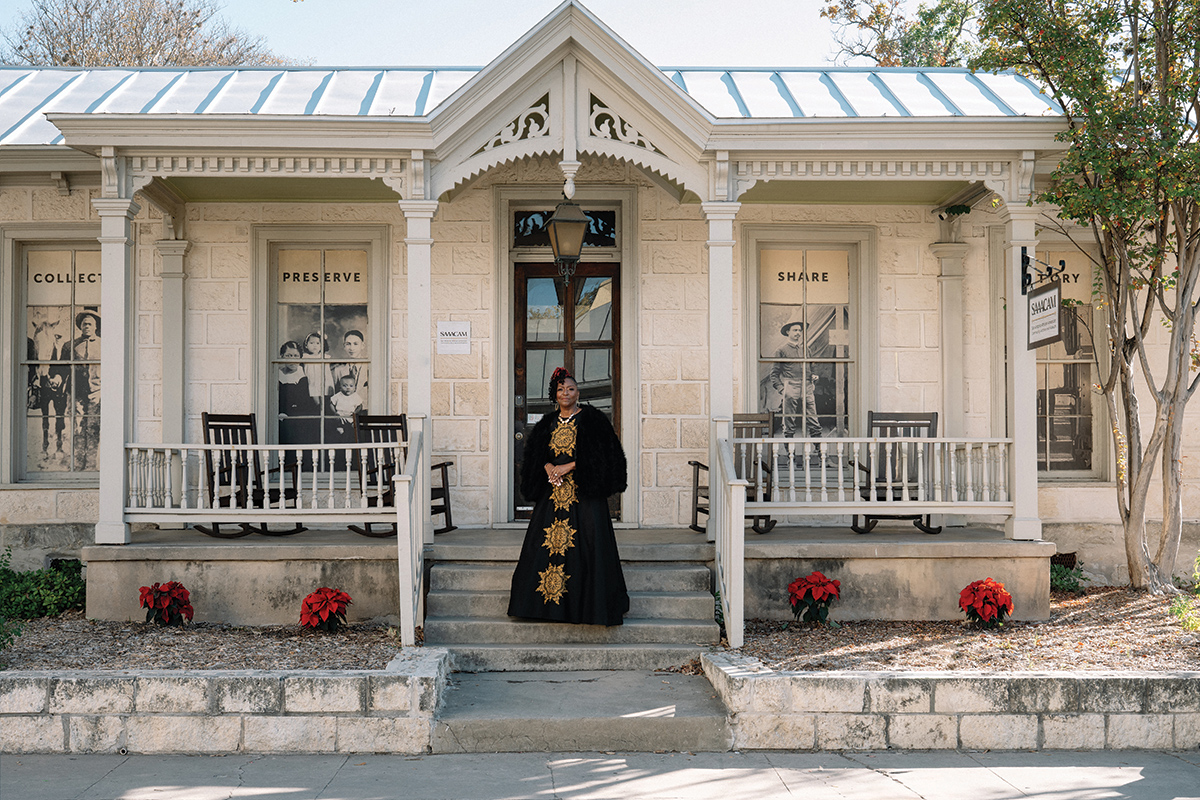
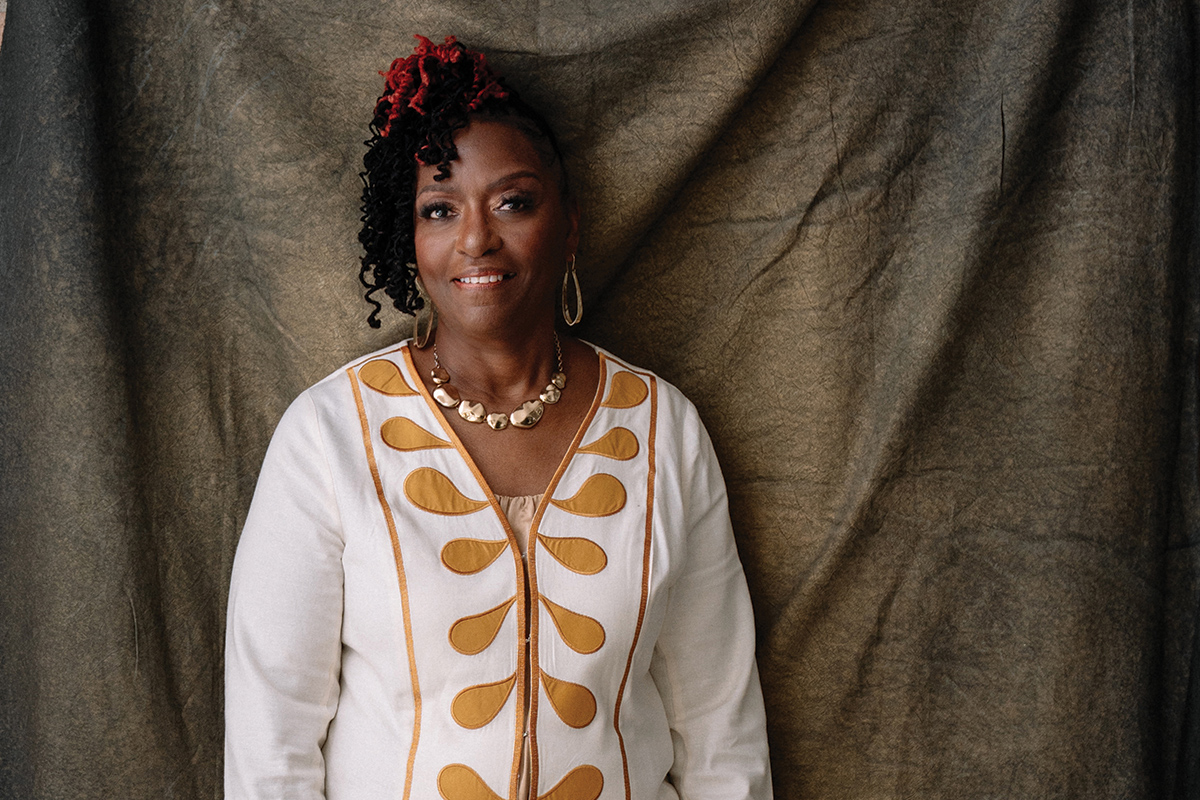
Deborah Omowale Jarmon, CEO/Director of the San Antonio African American Community Archive and Museum (SAAACAM), is passionate about her organization’s mission and its plans for the future. The mission of SAAACAM is ‘To collect, preserve, and share the history and cultural heritage of African descendants of San Antonio and the Southwest region.”
Jarmon’s father worked for CONRAIL when she was growing up, so she had the opportunity to travel all over the country by train, experiencing the different regional cultures of the U.S. “My parents were very intentional about exposing me to as many cultures as possible when I was growing up,” she said. They visited the 1964 World’s Fair in New York, the 1967 World’s Fair in Montreal, Canada, and the 1968 World’s Fair in San Antonio to experience their myriad cultural offerings. “My parents also taught me our African-American history that we weren’t being taught in school. It was very important to them that I learn as much about our history as possible.”
Jarmon reflected on her early exposure to racism and segregation, and how these experiences impacted her life and worldview. “Growing up, we traveled to Selma, Alabama, to visit my mother’s father several times a year. We would only stop at gas stations and other establishments that were listed in The Green Book,” Jarmon said. She also noted that they always packed a lunch for the trips, because so few restaurants were accommodating to Blacks in the South. The Green Book was an annual travel guide listing businesses that accommodated Black patrons during the racially segregated Jim Crow era.
Jarmon attended The Ohio State University, where she was selected to tutor fellow students at the school. “Ever since then, teaching and training others have always been a pivotal part of who I am,” she explained.
Shortly after, Jarmon embarked on a career in the air traffic controller profession. “Back when President Reagan fired all the air traffic controllers in 1981, the government recruited civilians to fill the empty positions,” Jarmon explained. She applied for a position with Air Traffic Control, was hired, and subsequently worked for the agency in several cities, ending in Oakland, California.
Jarmon retired in 2011 after a 27-year career in air traffic control. When she was ready to retire, Jarmon decided to move to San Antonio to be closer to her five grandchildren. “I wanted to be a positive influence in their lives,” she explained. She opened a bed and breakfast inn in King William and named it “Eva’s Escape at the Gardenia Inn,” after her mother. She operated this business for five years until she sold the building in 2017.
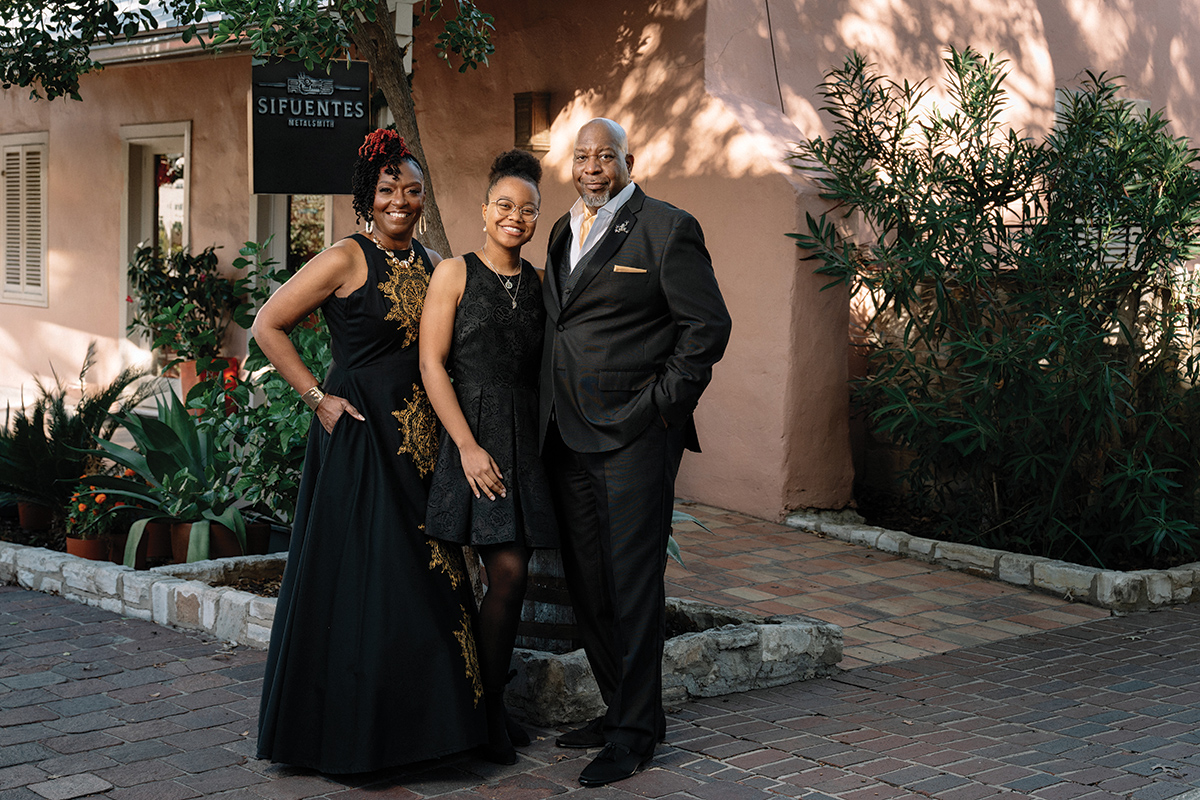
In 2012, she met Sho Nakpodia, founder of DreamWeek San Antonio, and he asked her to come work with the organization. Through her work with DreamWeek, she was introduced to the new SAAACAM organization and attended several of its open houses.
SAAACAM was established in 2017 at 430 N. Cherry Street in the Historic Sutton Family Home. In 2021, when SAAACAM moved into a 715 square-foot space in La Villita, the SAAACAM Board and leadership quickly realized they would soon need a larger space to hold their archives and exhibits. The search began for a possible new home for the museum. The late associate professor of history at Trinity University, Dr. Carey Latimore, was pursuing an opportunity to establish an African American civil rights history institute on the lower level of the historic Kress Building in downtown San Antonio. Latimore approached SAAACAM to see if the other floors of the Kress Building would be of interest as a new home for the museum.
“As soon as we moved into our space in La Villita, County Commissioner Rebecca Clay Flores saw that we needed a larger space and championed for us to get $5 million from the county,” Jarmon said. “The city of San Antonio then matched this with $5 million, plus an additional $1.2 million in TIRZ dollars.”
When SAAACAM was searching for a new Executive Director, Jarmon received a text about the opening. She responded that if she knew of some candidates, she would forward the text to them. The text replied that they wanted HER to apply for the position.
Not having direct museum work experience, she had to think it over. She talked with her husband and prayed about it, then decided to apply. After two interviews and the submission of a sample proposal on how to recruit and retain volunteers, she was offered the position.
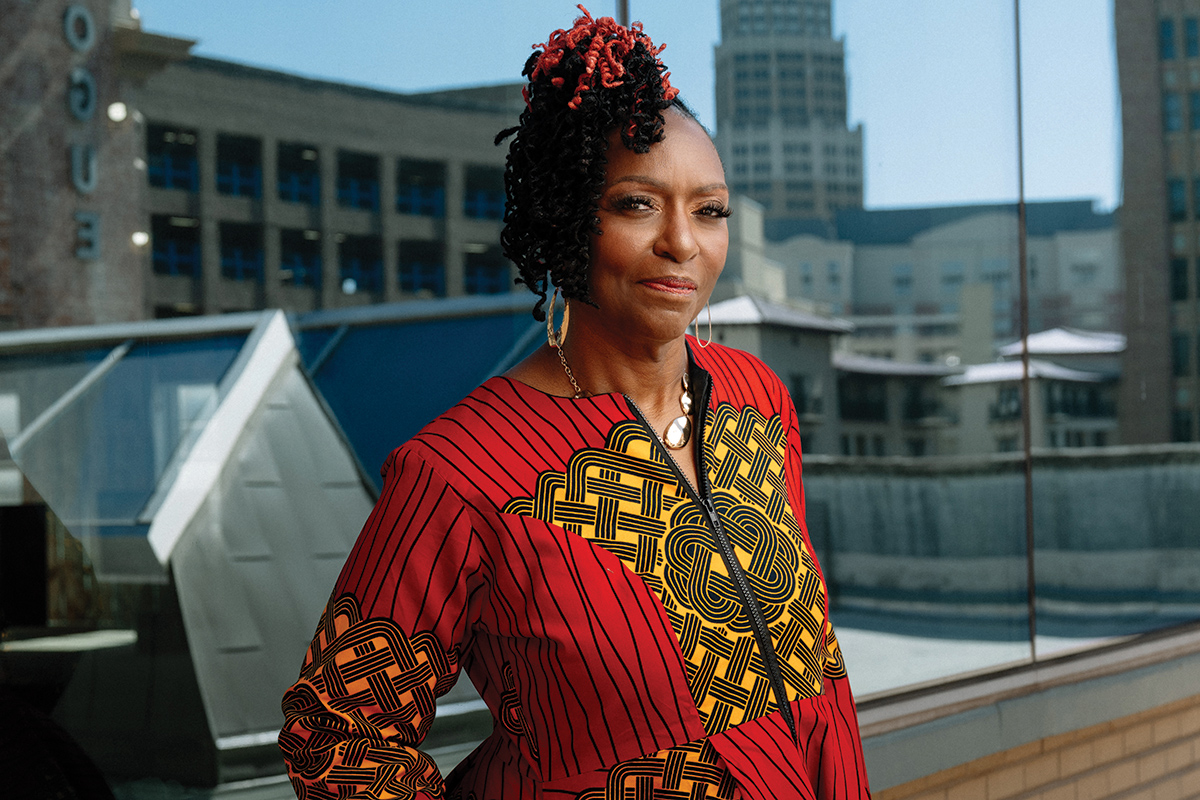
The six-story Samuel H. Kress Building was built in 1939 as a “five and dime” store. This store was a precursor to the later “department store” and featured a wide selection of general merchandise, as well as a popular lunch counter.
The Kress Building’s lunch counter was one of seven in downtown San Antonio that peacefully desegregated in 1960. The desegregation of these businesses briefly garnered national attention in the early 1960s and was a milestone in the U.S. civil rights movement.
“Moving our organization into a historic building such as the Kress-Grant Building is very significant to our African American community. For many years, we weren’t able to eat at these lunch counters or try on clothes in the stores,” she noted. “Now, we will have a space where we were previously denied access. Also, now we will make this space accessible to everyone in the community,” Jarmon said.
“Our goal at SAAACAM is to tell the San Antonio story through the lens of African descendants.
Our archives mostly grow through people in the community who come to us with their heirlooms. They seek to have these digitized,” she said. “We also do a four-times-a-year ‘History Harvest’ in partnership with local churches. Our collection is primarily growing by the community coming to us to donate historical items.”
Included in SAAACAM’s current collection is the bill of sale for seven slaves owned by Thomas and Tabitha Grayson in the 1800s and the original sign for the Keyhole Club, an integrated San Antonio dance hall in the 1940s and 1950s.
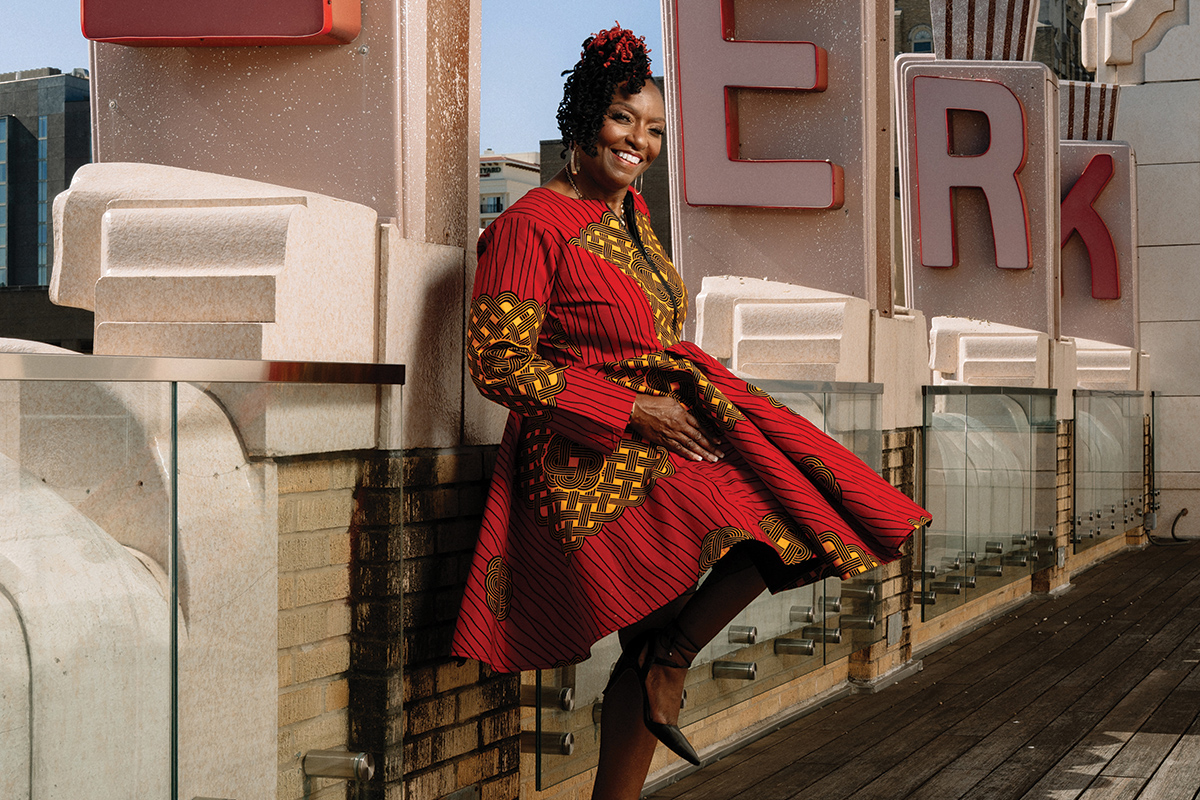
SAAACAM closed on the purchase of the Kress-Grant building on Dec. 15, 2023. The goal for Jarmon and the board and staff of the SAAACAM is to move into the Kress-Grant Building renovated site in 2028. The new 103,000 square-foot space will house exhibit space, a library, classrooms, a 400-seat auditorium, and a 12-room boutique hotel. In addition, dining facilities in collaboration with the St. Philip’s College HBCU Hospitality Program will be established.
Overland Partners is the architect for the renovation. The architectural and design firm is committed to creating a new space that reflects the mission of SAAACAM to honor the stories of struggle, resilience, fortitude, and achievement of the San Antonio African-American culture.
Jarmon’s passion for this organization is palpable. “This history speaks to me. I want children to see people who have thrived against all odds,” she explained. “Today, we have a space where African Americans were once denied access. Now, we’re making it accessible to everyone in the community. We are telling the San Antonio story through the lens of African descendants. The history of San Antonio is very rich – like a silk tapestry made of multiple colors and cultures.”