

Susan Naylor
Carrying Will and Charlie: The Heart of Susan Naylor
By Dawn Robinette | Photography by Suzanne Pack
Susan Naylor sees love in small signs – a penny on a driveway, an orb of light that appears in a photo, an infinity symbol – and takes them as a nudge to keep going. “I feel them around me all the time,” she says of her boys. “This is the way they live on.” She wants the full story to be told, with nothing airbrushed. “Because I’ve got to make sure they live on.”
“They” are her sons, Will and Charlie. And Naylor’s life forever changed on June 3, 2007, when she and Will were driving in Maui. A reckless driver hit them head-on. Naylor was fine, but 8-year-old Will wasn’t. As emergency responders worked on Will, she made a vow: “If he lives or if he dies, I will start the Will Smith Foundation and will help other kids because that’s what he wants to do.”
In the long, stunned hours that followed, surgeons tried and tried again. “It happened at 9 a.m., and he passed away at 1,” Naylor recalls. “They would say, ‘code red’… ‘that’s your son.’ He’s going into cardiac arrest, and he would come back, and I’m like, yep, that’s Will. He’s arguing with God.
“I said to the man upstairs, ‘I understand why you want him,’ and that was the beginning,” she explains as she both smiles and wipes away tears.
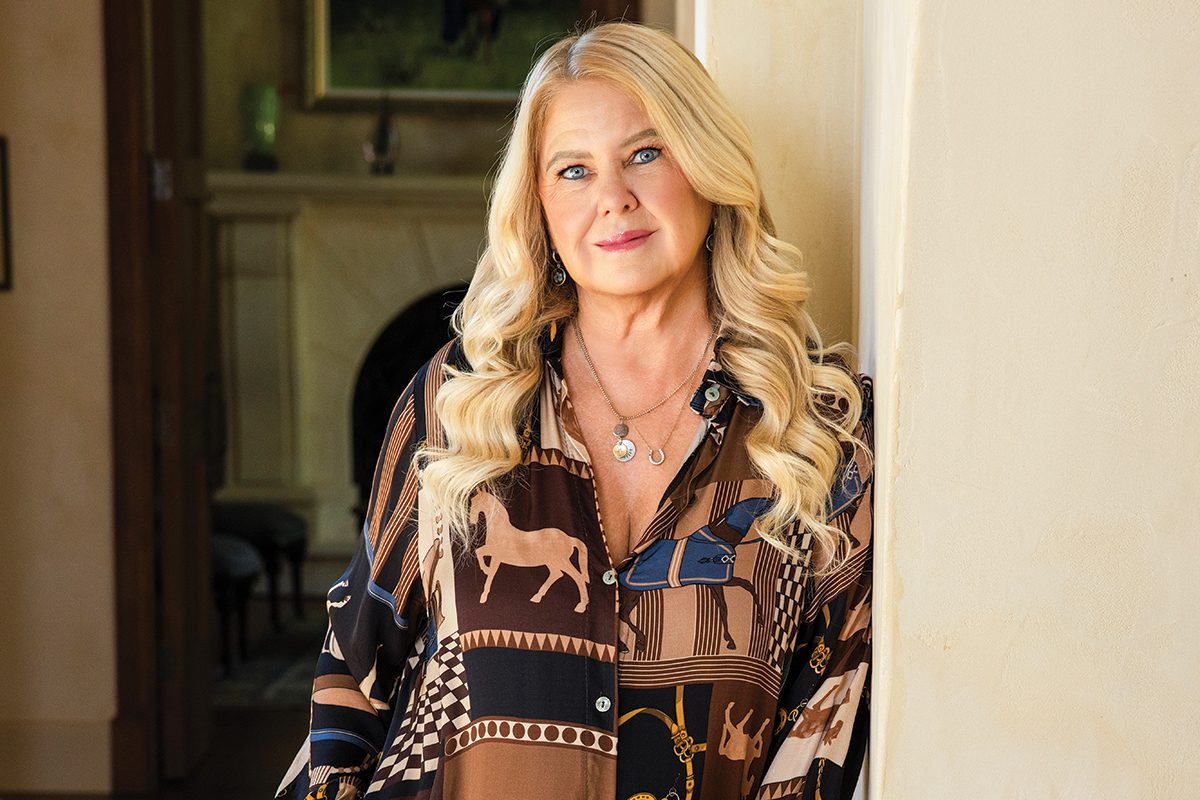
The vow she made was rooted in who Will already was. At school, he befriended classmates who were left out. His journal held a child’s global generosity: a dream that “the poor people in Africa have more things.” Naylor had taken him to Africa, where he noticed children running to the road for empty water bottles. That image – small hands, big need – became a compass. “Next year when we come back, I want to bring my toys to share with those kids,” he told her. The foundation’s early work followed that line of sight: toys, meals, water projects, practical love.
Eighteen years later, the Will Smith Foundation is the thread that runs through Naylor’s philanthropy – work defined not by headlines but by intention. “I don’t want this to be about what I give or how much I give, but why I’m giving,” she explains. It’s like Will said, you know, ‘to make things better for everybody else.’ This is the way they live on.”
Keeping that vow meant facing grief squarely. “I think a lot of people don’t understand how I can accept it the way I did, but I have a choice,” she says. “Believe me, I had my moments, but I realized I still had Charlie. And I needed to make sure Will is always remembered.”
Her giving began humbly and never stopped. “I was working my tail off in the nonprofit world,” she says. “That’s all I did – have these little events and raise money to just give away.”
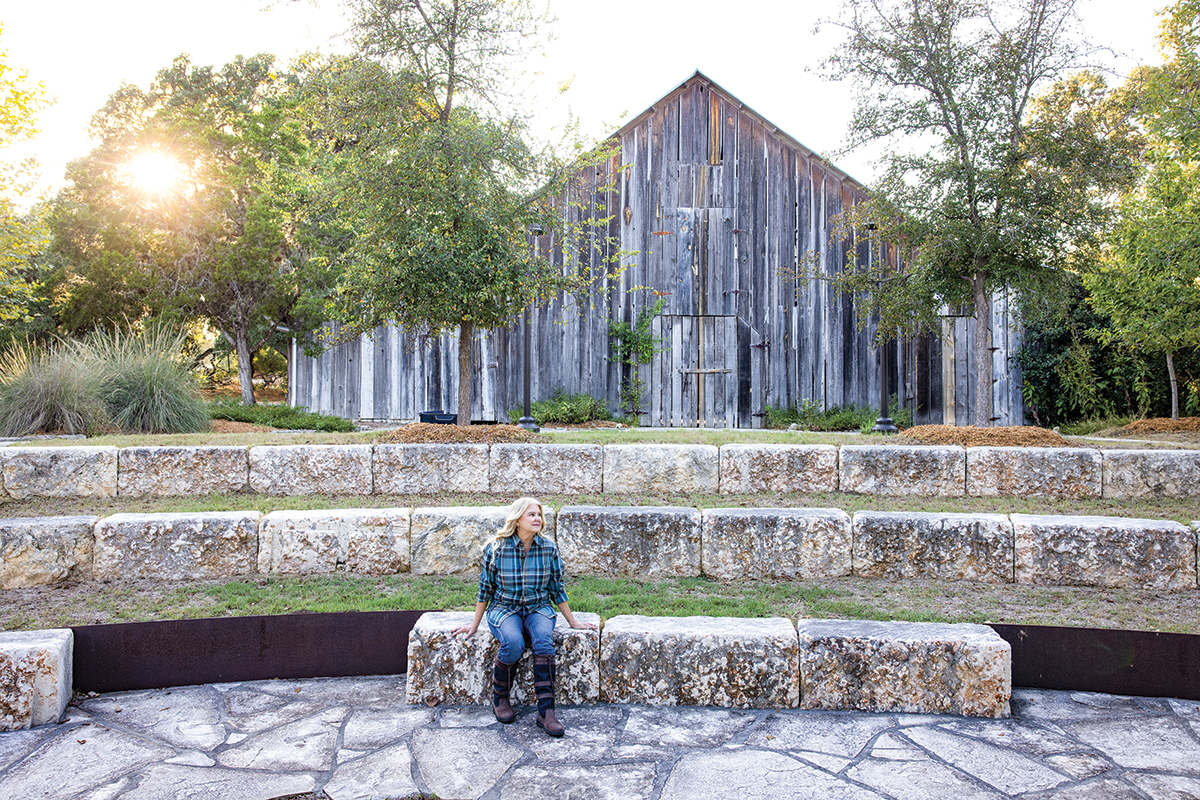
In time, financial resources from family land followed, and with them, the opportunity to do more. “Do you realize what I can do with this now?” she remembers saying when she learned of the money that would become available when the Eagle Ford Shale began producing. “That’s when we were able to start doing bigger things.”
At the same time, grief for one child braided into care for the other. Charlie was 19 when Will died, and the shock sent him searching. He tried, stumbled, tried again. “He overdosed on fentanyl that November,” Naylor says of 2014. “I say that the foundation was my way of healing from our wreck that killed Will. Charlie turned to drugs.”
But she refuses to let it be the last word. She took another breath and widened the circle – more support for housing-insecure neighbors in San Antonio and on Maui, more help where Charlie would have shown up first.
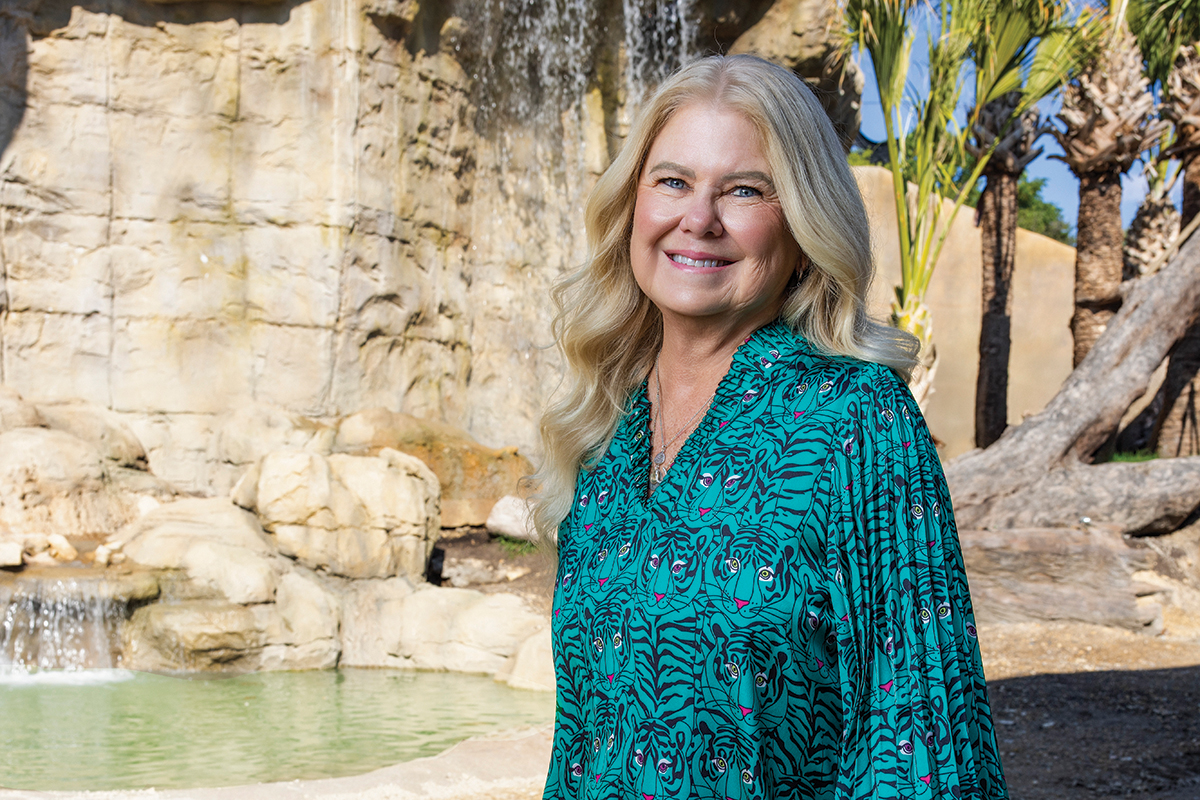
Ask her about impact and she’ll point to children – always children – and to places that shaped her own family. “The Witte and the San Antonio Zoo were the big things that my kids loved the most and also that I remember from childhood, so we started there trying to do bigger things.”
She calls the Will Smith Zoo School her “opus” because it returns learning to nature and teaches kindness. “The Will Smith Zoo School takes it to another level,” she says, explaining how her boys grew up on ranches, playing with sticks, dirt and animals.
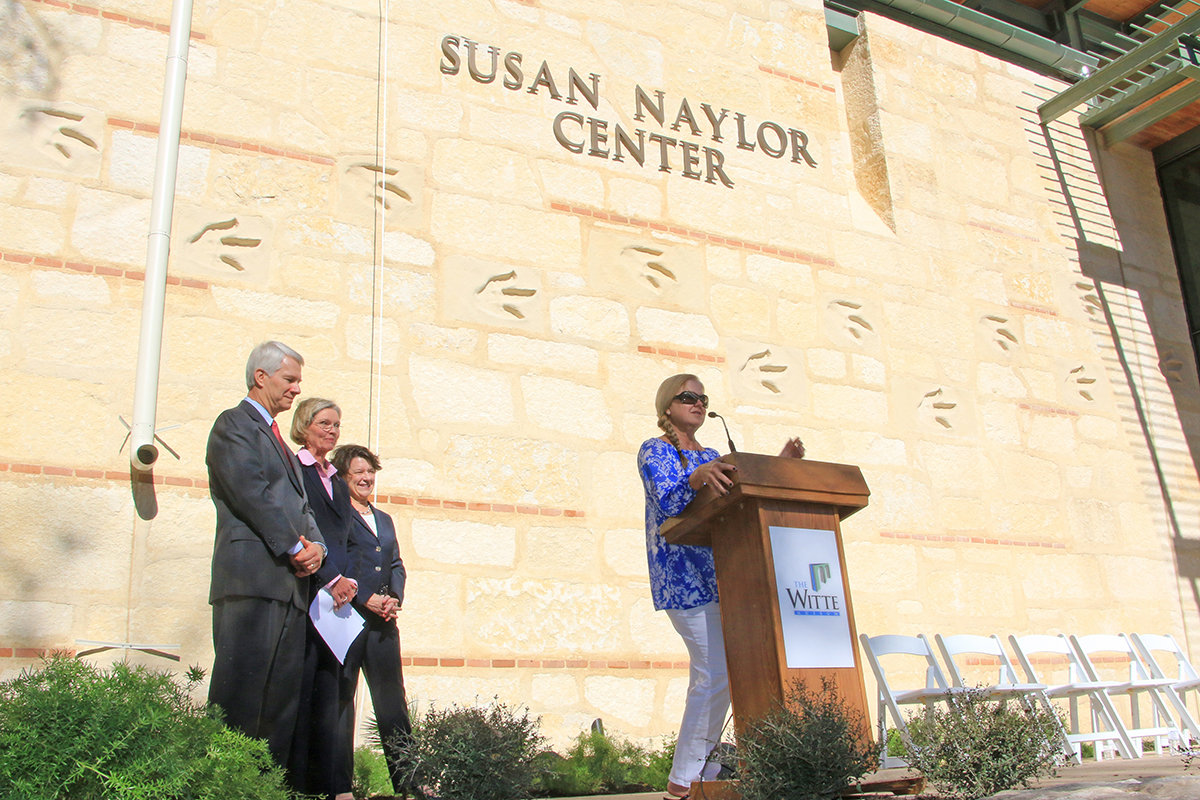
Her philanthropy at the Witte Museum is equally personal. “I have memories of going there with my family.” There’s the Will Smith Education Center, the amphitheater honoring Charlie, and the B. Naylor Morton Collection Center named for her father – layers of family memory made public, so others can learn and gather.
Naylor’s biography is textured: ranching roots, a lifetime of hunting and travel, and a family history marked by tragedy long before her own. She tells those stories not to dwell on loss but to explain the shape of her resilience—and her tenderness. And her own story matters to her now in a fresh way. She recently reclaimed her family name, Naylor, as her last name, tying herself to a lineage she’s carefully preserved at home and in museum collections.
She tells stories of ranches, of a beloved father whose name graces a collection center, of ancestors who made hard choices and left her their grit. “After me, there’s nobody left,” she says, not with sorrow but with resolve. “That’s why I thought, well, someone needs to tell this story.” She’s recording memories for a book; the kind of narrative that will help strangers understand why a schoolyard laugh or a gallery label can reduce her to grateful tears.
Her circle keeps her steady. “I surround myself with positive people,” she says. “I call them my little tribe.” They are board colleagues at the Witte and the Zoo, keepers and curators, teachers and students, neighbors from Maui and San Antonio, friends who met the boys and friends who know them now through her. Many of those friends found their own healing in Charlie’s humor or Will’s tenderness. Naylor has a way of making everyone feel like family, always widening her circle.
She carries practical advice for other women, honed by fire and softened by grace. “Be honest. Be true to yourself. Don’t ever forget who you are,” she says. “Be forgiving. Holding on to hurt and pain only damages you.” She has learned to set boundaries so that giving stays aligned with purpose, to say yes when it matters and no when it doesn’t, to let the work be the point. “It takes a village to raise me,” she jokes, meaning that the same community she serves is the one that lifts her up when the road gets steep.
Grace spills into her hardest choices, too. Prosecutors once sought a long sentence for the driver who caused the wreck. Naylor offered a different path. “What about 10 years’ probation?” she suggested at a meeting, and “they looked at me like I had eight heads.” The judge said yes – “only because of you” – and years later, when the woman moved to San Antonio, Naylor brought her to openings so she could see what the foundation was doing. “Be nice to her,” she told friends. “She’s trying to get her life together.” She is not absolving harm but instead choosing a future for someone who did harm. It sounds like what Charlie would have nudged her to do.
Today her days are filled with the quiet labor of kindness: a program at the Zoo, collections care at the Witte, a ‘yes’ to a small nonprofit no one else has noticed. She still hunts for pennies, still spots infinity signs, still finds her boys in the “weirdest little things.” “They would want me to be happy,” she says. “They would want me to be joyous, and they would want me to be kind.” So that is how she lives — real, present, and open-hearted.
San Antonio is full of generous people. But Susan Naylor’s ‘why’ is singular — fierce, tender, and steady. It began on a road in Maui and keeps widening here: in outdoor classrooms where children learn under live oaks, in galleries where history is kept safe for the next generation, in simple acts of hospitality that feel like home. “I carry them with me,” she says. And because she does, Will and Charlie remain — present in the work, visible in the lives it touches and loved out loud in the city their mother keeps blessing.

One Response
Susan was captured BEAUTIFULLY in this article both in word and in pictures. Thank you for showing HER.